You Won’t Believe What These Buildings in Bilbao Can Do
Imagine stepping into a city where concrete, steel, and glass don’t just stand tall—they sing. That’s exactly what happened when I wandered through Bilbao, Spain. I didn’t expect much beyond a quick cultural pit stop, but the landmark architecture here completely redefined my idea of urban beauty. From shimmering titanium curves to bold modern designs rooted in history, Bilbao proves that buildings can stir the soul. This is more than sightseeing—it’s an emotional journey through form, light, and innovation. What makes Bilbao extraordinary is not just its skyline, but the way its architecture invites you to feel something deeper: wonder, connection, even renewal. For travelers seeking meaning in the places they visit, this Basque city offers a rare gift—beauty with purpose.
First Impressions: Arriving in Bilbao – A City That Feels Alive
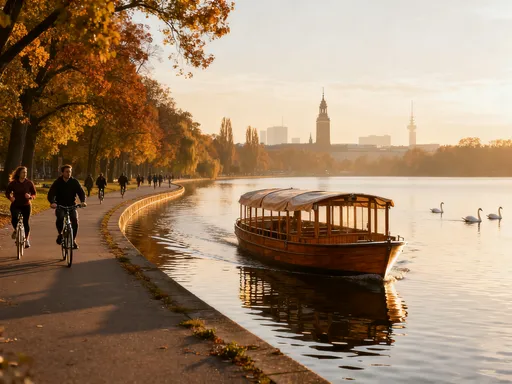
From the moment you step off the train or exit the airport shuttle, Bilbao greets you like a story already in motion. Nestled in a green valley where the Nervión River winds toward the Cantabrian Sea, the city unfolds with quiet confidence. The skyline blends historic church spires with sleek contemporary silhouettes, creating a visual harmony that feels both grounded and forward-looking. Unlike cities that cling to either tradition or modernity, Bilbao embraces both with grace. The hills surrounding the urban core are dotted with red-tiled rooftops of residential neighborhoods, while the riverbanks reflect shimmering facades of museums and cultural centers.
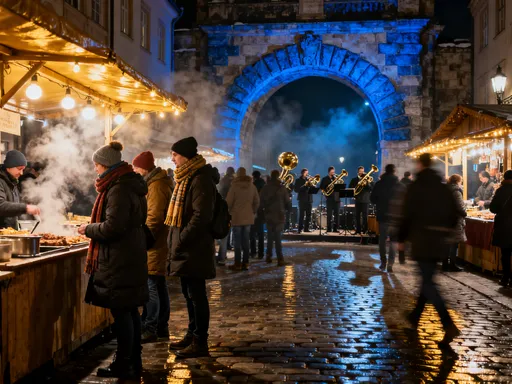
What strikes visitors most is how accessible and human-scaled the city feels. Despite its architectural boldness, Bilbao never overwhelms. Wide promenades invite leisurely strolls, and public plazas buzz with life—locals sipping coffee at outdoor cafés, children chasing pigeons, musicians playing under stone arches. The urban planning here is intentional, designed not just for efficiency but for experience. Pedestrian zones connect key districts seamlessly, and green spaces are woven throughout, offering pockets of calm amid the energy. This balance of function and feeling is no accident—it reflects a deep commitment to quality of life.
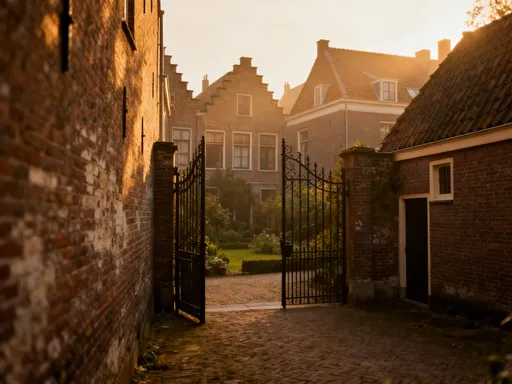
The contrast between old and new is especially compelling. In the Casco Viejo, or Old Town, narrow cobblestone streets tell centuries-old stories. Timber-framed buildings with flower boxes lean gently toward one another, as if sharing secrets. Centuries-old churches stand beside tapas bars where families gather for evening snacks. Just a short walk away, the city transforms. The sleek curves of the Guggenheim Museum rise beside the water, its metallic surface shifting with the daylight. Yet rather than clash, these worlds complement each other—each enhancing the other’s significance. Bilbao doesn’t erase its past; it builds upon it.
This sense of continuity makes the city feel alive. It’s not a museum piece frozen in time, nor is it a glossy replica of global trends. Instead, Bilbao has cultivated a unique identity where progress honors heritage. The result is a place that welcomes newcomers not as spectators, but as participants in an ongoing transformation. For women in their 30s to 50s—many of whom balance family, work, and personal dreams—Bilbao offers a refreshing reminder that change can be beautiful, meaningful, and deeply human.
The Guggenheim Effect: How One Building Changed Everything
No discussion of Bilbao’s architecture is complete without the Guggenheim Museum, a structure so transformative it gave rise to its own economic term: the “Guggenheim Effect.” Before its opening in 1997, Bilbao was known primarily as an industrial port city, weathered by decades of shipbuilding and steel production. Its economy had declined, and its international profile was fading. Then came Canadian-American architect Frank Gehry’s visionary design—a building so daring, so sculptural, that it captured the world’s imagination overnight.
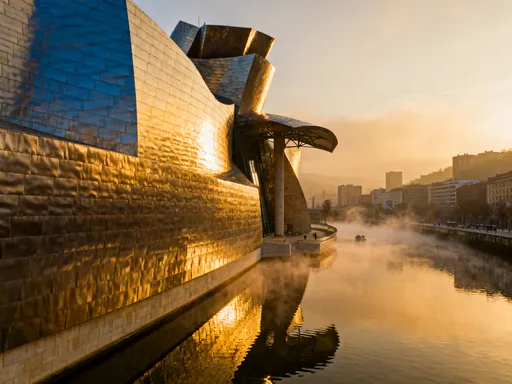
The museum’s most striking feature is its undulating form, clad in over 30,000 thin titanium tiles. These scales catch and refract sunlight in ever-changing patterns, making the building appear almost alive. Depending on the weather, it glows silver in the morning, blushes gold at sunset, and shimmers like liquid mercury under overcast skies. The structure seems to float above the riverbank, connected to the water through reflective pools that amplify its curves. Even the interior defies convention—vast atriums soar upward, filled with natural light, while galleries branch off like veins from a central heart.
But the Guggenheim’s impact extends far beyond aesthetics. Within three years of opening, it attracted over 4 million visitors. Tourism revenue surged, funding citywide renovations and new infrastructure projects. Hotels, restaurants, and shops flourished. More importantly, the museum became a catalyst for cultural revival. It drew major international exhibitions, supported local artists, and repositioned Bilbao as a destination for creativity and innovation. The success proved that architecture could be more than shelter—it could be a force for regeneration.
Gehry’s philosophy centered on emotion and movement. He rejected rigid geometric forms in favor of organic, flowing shapes inspired by nature—fish, flowers, even sails. His use of advanced computer modeling allowed precise fabrication of complex curves, pushing the boundaries of what was possible in construction. Yet despite its high-tech execution, the building feels warm and inviting. Visitors often describe an emotional response upon first seeing it—surprise, awe, even joy. This emotional resonance is key to its power. It reminds us that great architecture doesn’t just house experiences; it creates them.
For travelers, the Guggenheim is not just a museum but a symbol of possibility. It shows how one bold idea, executed with vision and care, can transform an entire city. And for women navigating their own life transitions—raising children, advancing careers, seeking personal fulfillment—it offers a quiet inspiration: reinvention is not only possible, it can be breathtaking.
Beyond the Guggenheim: Hidden Architectural Gems You Can’t Miss
While the Guggenheim draws the crowds, Bilbao’s true architectural richness lies in its diversity. Just across the river stands the Zubizuri Bridge, another Gehry creation—this time a pedestrian crossing defined by a single sweeping curve. Its glass-floored walkway floats between two stone banks, offering panoramic views of the city and river. Walking across feels like gliding above water, especially at dusk when the bridge is softly illuminated from below. Locals use it daily, not just as a shortcut, but as a place to pause, take photos, or simply enjoy the breeze.
Near the central square of Plaza Moyúa, the Arriaga Theatre presents a different kind of elegance. Built in the early 20th century, its neoclassical façade features Corinthian columns, ornate stonework, and a grand entrance topped with sculptures. Inside, red velvet drapes, crystal chandeliers, and gold leaf detailing transport visitors to another era. Named after the Basque composer Juan Crisóstomo de Arriaga, the theater hosts opera, ballet, and classical concerts, serving as a living monument to the region’s artistic traditions. Its preservation reflects Bilbao’s respect for cultural continuity, even amid rapid modernization.
Another standout is the Azkuna Zentroa, a former wine warehouse transformed into a vibrant cultural center. Designed by French architect Philippe Starck, the renovation retained the original brick structure while introducing bold interior interventions—brightly colored columns, suspended walkways, and interactive installations. Today, it houses everything from art exhibitions and dance classes to cooking workshops and children’s programs. It’s a true community hub, reflecting a philosophy that culture should be inclusive, dynamic, and accessible to all.
Lesser-known but equally fascinating is the San Antón Church, one of Bilbao’s oldest buildings, perched near the river in the Casco Viejo. Its modest size belies its historical importance—it appears on the city’s coat of arms and has been a place of worship since the 14th century. The current structure dates mostly from the 16th century, rebuilt after fires and wars. Its stone bell tower stands in quiet contrast to the glass towers nearby, a reminder of the city’s enduring spirit.
These sites, though quieter than the Guggenheim, are essential to understanding Bilbao’s architectural soul. They show that innovation doesn’t require erasing the past. Instead, the city thrives on layering—new designs responding to old ones, each adding depth to the urban narrative. For travelers, seeking out these hidden gems offers a richer, more personal experience. It’s not about checking off landmarks, but about discovering the quiet moments of beauty that linger long after the trip ends.
Walking the City: An Architectural Stroll from Old Town to the Riverfront
One of the best ways to experience Bilbao is on foot. A well-planned walking route from the Casco Viejo to the riverfront reveals the city’s architectural evolution like chapters in a book. Begin in Plaza Nueva, a grand 19th-century square surrounded by colonnaded buildings. The sound of footsteps echoes on stone as locals gather in pintxo bars beneath arched walkways. The air carries the scent of roasted peppers and cured ham—a sensory prelude to the journey ahead.
From here, follow Calle Somera or Calle Tendería into the heart of the Old Town. These narrow streets, once the center of medieval Bilbao, are lined with centuries-old buildings now housing boutique shops, bakeries, and family-run restaurants. Look up, and you’ll notice wrought-iron balconies overflowing with geraniums, timber beams darkened by time, and stone carvings marking former guild halls. Every detail tells a story of craftsmanship and community.
As you approach the river, the architecture begins to shift. The stone facades give way to glass and steel. The Ribera Market, recently restored, stands as a bridge between eras. Its iron-and-glass roof, reminiscent of 19th-century industrial design, shelters a bustling food market where vendors sell fresh fish, local cheeses, and seasonal fruits. The space buzzes with energy, a testament to the Basque love of food and gathering.
Crossing the Santiago Bridge, you’re greeted with the first full view of the Guggenheim. The river reflects its curves, doubling the spectacle. Continue along the riverside promenade, where modern sculptures dot the landscape—Jeff Koons’ giant Puppy, a topiary dog covered in flowering plants, stands guard at the entrance. The path is wide and smooth, designed for walking, cycling, or simply sitting on a bench to watch the world go by.
This journey from old to new is more than geographic—it’s emotional. Each step reveals how architecture shapes experience. The intimacy of the Old Town fosters connection; the openness of the riverfront inspires reflection. The city doesn’t hide its transitions; it celebrates them. For women who often move between roles—mother, professional, partner, individual—this walk mirrors their own fluid identities. Bilbao, like them, is multifaceted, resilient, and constantly evolving.
Materials and Mastery: The Craft Behind Bilbao’s Iconic Facades
The brilliance of Bilbao’s architecture lies not just in design, but in execution. The materials used—titanium, glass, steel, stone—are chosen not for trendiness, but for their ability to withstand the region’s humid maritime climate while enhancing aesthetic impact. The Guggenheim’s titanium cladding, for example, was selected for its durability, lightness, and unique reflective quality. Each tile was custom-fitted using aerospace technology, ensuring a seamless, organic appearance. Over two decades later, the surface remains largely unchanged, a testament to both material quality and engineering precision.
Equally impressive is the integration of traditional craftsmanship with modern techniques. During the restoration of historic buildings, artisans used original methods to repair stonework, reforge iron details, and recreate period-accurate finishes. At the same time, new constructions incorporate sustainable technologies—energy-efficient glazing, rainwater harvesting systems, and solar shading devices. The Azkuna Zentroa, for instance, uses natural ventilation and daylight optimization to reduce energy consumption, proving that beauty and responsibility can coexist.
Local climate played a crucial role in design decisions. Bilbao receives frequent rainfall, so architects prioritized water management. Sloped roofs, drainage channels, and permeable surfaces help control runoff. Reflective materials reduce heat absorption, keeping interiors comfortable without excessive air conditioning. Even the placement of buildings considers wind patterns and sun exposure, maximizing comfort for pedestrians and occupants alike.
What emerges is a city built with care and foresight. The attention to detail—from the texture of a stone wall to the angle of a glass panel—reflects a deep respect for both people and environment. This level of craftsmanship resonates deeply with women who value thoughtfulness in their homes, families, and choices. Bilbao’s buildings are not just impressive; they are considerate, much like the quiet strength often found in the women who shape households and communities.
Architecture as Identity: How Buildings Reflect Basque Culture
Bilbao’s architectural transformation is inseparable from Basque identity. The Basque people, with their distinct language, traditions, and history, have long valued resilience, self-determination, and creativity. When the city faced economic decline in the late 20th century, it didn’t retreat into nostalgia. Instead, it chose renewal—bold, confident, and rooted in pride. The new skyline became a canvas for expressing these values.
Public spaces were redesigned to encourage gathering and interaction. Plazas, parks, and promenades are not afterthoughts; they are central to the city’s vision. Street art, sculptures, and performance areas invite participation, reinforcing the idea that culture belongs to everyone. The integration of art into everyday life reflects a Basque belief in the importance of expression and community.
Even the choice of architects reflects cultural openness. While Gehry is not Basque, his collaborative approach respected local context. Similarly, Spanish and European designers worked alongside local engineers and builders, blending global vision with regional knowledge. This fusion mirrors the Basque ability to maintain identity while embracing the world.
The result is a city that feels authentic, not manufactured. Its architecture tells a story of survival, reinvention, and hope. For women who have navigated personal challenges—raising children, supporting aging parents, pursuing passions—this narrative feels familiar. Bilbao’s journey echoes their own: not a linear path, but a series of courageous choices made with love and purpose.
Why Bilbao Should Be on Every Traveler’s Radar – And How to Experience It Fully
Bilbao deserves a place on every traveler’s list, not just for architecture lovers, but for anyone seeking meaning in their journeys. It offers something rare: a city that has transformed itself with grace, beauty, and heart. Whether you’re drawn to art, history, food, or simply the joy of walking through a well-designed space, Bilbao delivers.
The best time to visit is between May and October, when the weather is mild and outdoor spaces are at their most inviting. Spring brings blooming flowers and fewer crowds, while summer offers festivals and extended daylight. Guided walking tours—especially those focused on architecture or urban renewal—provide valuable context and access to lesser-known stories. Audio guides at the Guggenheim are excellent, but consider hiring a local guide for a more personalized experience.
When exploring, slow down. Don’t rush from landmark to landmark. Sit in a plaza with a coffee. Watch how light moves across a building’s surface throughout the day. Visit the same site in morning and evening—you’ll see it anew. Take time to explore the pintxo bars, where food becomes art on a small plate. Engage with locals; many are proud to share their city’s story.
Most importantly, allow yourself to be moved. Architecture is not just about form; it’s about feeling. In Bilbao, buildings do more than occupy space—they inspire, comfort, and connect. They remind us that cities, like people, can grow, heal, and shine. For women who carry the weight of responsibility with quiet strength, Bilbao offers a powerful message: transformation is possible. And when done with vision and care, it can be nothing short of magnificent.