You Won’t Believe What Tel Aviv’s Cityscape Did to My Soul
Tel Aviv doesn’t just rise from the Mediterranean coast—it pulses, breathes, and dazzles with unrestrained energy. I arrived expecting sun and sand, but what hit me was a skyline alive with rhythm: neon-lit towers dancing above ancient alleys, Bauhaus curves glowing at golden hour, and the nonstop buzz of a city that never truly sleeps. This isn’t just architecture—it’s emotion carved in concrete and light. Let me take you through the streets where design meets desire, and every corner tells a story louder than words.
First Light Over White City
The morning sun spills over Tel Aviv like a golden veil, gently awakening the city’s architectural crown jewel: the White City. As the light climbs across its soft pastel facades, the UNESCO-listed Bauhaus district emerges in quiet elegance. This is where history stands tall in stucco and shadow, where over 4,000 buildings from the 1930s form the largest concentration of International Style architecture in the world. Walking along Rothschild Boulevard at dawn, the city feels both timeless and alive. The broad avenue, lined with plane trees and dotted with circular plazas, invites a slow pace—perfect for sipping espresso at a sidewalk café while watching the city stir.
What makes the White City so extraordinary isn’t just its architectural significance, but how seamlessly it integrates into daily life. These buildings were designed with purpose: wide balconies to catch sea breezes, rounded corners to soften the urban edge, and pilotis—elevated ground floors—that allow air and movement to flow freely beneath. The result is a cityscape that breathes. Architects fleeing Europe in the 1930s brought modernist ideals to this stretch of coastline, adapting them to the Mediterranean climate and creating a uniquely Israeli interpretation of modern living. Today, their legacy thrives not in museums, but in homes, offices, and art studios where people live, work, and dream.
As the sun climbs higher, the pastel hues—creams, pinks, and sky blues—begin to glow, reflecting off polished stone and aged iron railings. The light dances across textured walls, revealing subtle imperfections that speak of decades of sun, salt, and stories. It’s in these quiet moments that Tel Aviv reveals its soul: not in grand gestures, but in the gentle curve of a balcony railing or the way sunlight filters through a latticed window. The White City is more than a collection of buildings; it is a living archive of resilience, innovation, and beauty.
Beating Heart of the Promenade
Stretching along the Mediterranean for miles, the Tayelet—Tel Aviv’s beloved seaside promenade—is where the city’s pulse is most clearly felt. Here, the rhythm of waves meets the steady beat of footsteps, bicycle wheels, and distant laughter. From sunrise to long after sunset, the promenade is alive with motion: joggers in athletic wear, families flying kites, couples sharing quiet moments on benches, and street performers adding splashes of music and color to the coastal canvas. It is a place of connection—between people, between land and sea, and between tradition and modernity.
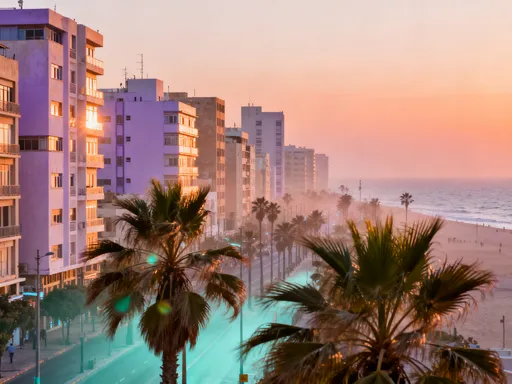
One of the most striking aspects of the Tayelet is its design. Elevated walkways, thoughtfully integrated into the coastline, allow for uninterrupted views and seamless transitions between neighborhoods. At Gordon Beach, the contrast is especially vivid: the calm, shimmering sea stretches out before you, while behind, the city rises in a dynamic skyline of glass and steel. It’s a visual dialogue between stillness and energy, nature and human ambition. The promenade isn’t just a path—it’s a stage where life unfolds in real time, where every visitor becomes part of the city’s ongoing story.
The promenade also serves as a gateway to Tel Aviv’s vibrant beach culture. Dozens of public beaches, each with its own character, line the coast. Some are known for their calm waters, ideal for families; others attract surfers and young professionals seeking a more active vibe. Lifeguard towers, painted in bright blues and whites, dot the shoreline, standing as sentinels of safety and order. Along the way, small kiosks offer fresh juice, ice cream, and shawarma, turning a simple stroll into a sensory journey. The Tayelet is more than recreation—it’s a daily ritual, a place where the city comes to breathe, reconnect, and recharge.
Where Old Meets Bold: Jaffa Reimagined
Just south of Tel Aviv’s modern skyline lies Jaffa, a port city with roots stretching back over 4,000 years. Walking through its narrow, stone-paved alleys feels like stepping into a living museum—one that refuses to be frozen in time. Jaffa’s ancient walls, weathered by centuries of wind and war, now frame a thriving cultural renaissance. Art galleries spill out of converted Ottoman-era homes, boutique studios showcase handcrafted jewelry and ceramics, and cliffside cafés offer panoramic views of the sea and the city beyond.
What makes Jaffa so emotionally powerful is the way it holds its history while embracing the new. One moment, you’re tracing your fingers along a centuries-old stone archway; the next, you’re admiring a bold contemporary mural painted across a restored façade. The juxtaposition is not jarring—it’s harmonious. In the Jaffa Flea Market, vendors sell vintage records and handmade soaps beneath strings of colored lights, while nearby, a modern art installation pulses with light and sound. This is a place where time layers upon itself, where the past is not erased but reinterpreted.
From the elevated viewpoints near St. Peter’s Church, the contrast becomes breathtaking. To the west, the Mediterranean glows in the afternoon sun; to the north, Tel Aviv’s skyline rises like a futuristic mirage. Seeing these two worlds—ancient Jaffa and modern Tel Aviv—side by side creates a profound sense of continuity. It’s a reminder that cities are not static; they evolve, adapt, and grow, carrying their histories forward like treasured heirlooms. In Jaffa, the weight of millennia is felt in every step, yet the air is filled with creativity, possibility, and renewal.
Nightfall on Rothschild: When the City Glows
As dusk settles over Tel Aviv, the city undergoes a quiet transformation. The golden light of sunset gives way to a cooler blue, and then, almost imperceptibly, the skyline begins to ignite. Glass towers shimmer as interior lights flicker on, and neon signs pulse with life. Along Rothschild Boulevard, the energy shifts—daytime calm gives way to electric elegance. Cafés that were quiet in the morning now buzz with conversation; street performers draw small crowds; and rooftop bars welcome guests with cocktails and panoramic views.
This is when Tel Aviv reveals another dimension of its personality. The city never truly sleeps, but at night, it dreams in color and light. The illuminated Bauhaus buildings, with their clean lines and soft curves, take on a new aura—less architectural, more poetic. Their facades, once defined by sunlight, now glow like lanterns, casting gentle reflections on the pavement. The contrast between the historic and the modern is especially striking after dark: the rounded balconies of the White City stand in quiet dignity, while sleek high-rises beam with digital art and dynamic lighting displays.
One of the most memorable experiences is walking Rothschild at night, when the air is warm and the city feels both intimate and expansive. The scent of jasmine drifts from courtyard gardens; music spills from open windows; and the distant hum of the Mediterranean provides a soothing backdrop. It’s a sensory symphony, carefully orchestrated by urban life. Night in Tel Aviv is not about excess—it’s about connection, celebration, and the quiet joy of being present in a city that knows how to shine without losing its soul.
Hidden Layers: Off-the-Beaten-Path Perspectives
Beyond the well-trodden paths of Rothschild and the Tayelet, Tel Aviv reveals its most intimate secrets in quiet corners and unexpected vantage points. These are the places that locals cherish—spots not found in guidebooks, but discovered through curiosity and conversation. In Neve Tzedek, one of the city’s oldest neighborhoods, rooftop gardens bloom above narrow lanes, offering serene escapes with sweeping views of the skyline. From these elevated perches, the city feels softer, more personal, as if seen through the eyes of someone who truly knows it.
Another hidden gem is a small café in Florentin, a formerly industrial district turned creative hub. Tucked away on a side street, this unassuming spot serves excellent coffee and homemade pastries, but its real treasure is the view. Through its large windows, the Tel Aviv skyline unfolds in layers—Bauhaus buildings in the foreground, modern towers rising behind, and the sea shimmering in the distance. It’s a place where artists, freelancers, and longtime residents gather, not for spectacle, but for the simple pleasure of watching the city breathe.
Then there’s a quiet stairway in Kerem HaTeimanim, a historic Yemenite neighborhood. Climbing its stone steps, you’re rewarded with an unfiltered panorama: rooftops of all shapes and sizes, satellite dishes and laundry lines, palm trees swaying in the breeze. There are no tourist signs, no souvenir shops—just the raw, unpolished beauty of everyday life. From here, the city feels real, grounded, and deeply human. These hidden perspectives don’t just offer views—they offer understanding. They remind us that behind every skyline is a mosaic of lives, stories, and quiet moments that make a city truly alive.
Design as Identity: The Language of Tel Aviv’s Architecture
Tel Aviv’s skyline is not the result of chance—it is the expression of a philosophy, a way of life shaped by history, climate, and vision. The city’s architectural language is one of clarity, function, and adaptation. The Bauhaus principles that defined the White City—simplicity, symmetry, and integration with nature—continue to influence new construction today. Rounded corners, open lobbies, and elevated bases are not just aesthetic choices; they are responses to the Mediterranean sun, designed to maximize airflow and minimize heat absorption.
In recent years, sustainability has become a central theme in Tel Aviv’s urban development. Green roofs, covered in drought-resistant plants, now crown many new buildings, helping to insulate interiors and reduce the urban heat island effect. Solar panels are increasingly common, especially on public buildings and residential towers, reflecting the city’s commitment to renewable energy. Even street lighting has been upgraded to energy-efficient LEDs, reducing both consumption and light pollution.
But beyond environmental concerns, architecture in Tel Aviv serves a deeper purpose: fostering community. Public plazas, pedestrian-friendly streets, and mixed-use developments encourage interaction and movement. Buildings are designed not just to stand, but to connect—to the environment, to each other, and to the people who inhabit them. This is a city that values livability as much as beauty, where innovation serves human needs. The skyline is not a monument to ego, but a reflection of collective care, resilience, and forward-thinking design.
Why This Cityscape Stays With You
Months after leaving Tel Aviv, certain images remain etched in memory: the way the morning light gilded the curves of a Bauhaus balcony, the sound of waves beneath a skyline of glowing towers, the warmth of sun-baked stucco under my palm. These are not just visual impressions—they are emotional imprints. Tel Aviv’s cityscape does not merely impress; it resonates. It speaks to something deep within: a longing for beauty, connection, and meaning in the spaces we inhabit.
What makes this city unforgettable is its balance—the way it honors the past while embracing the future, the way it blends intensity with intimacy. It is a place where ancient stones stand beside glass towers, where the sea meets the city, and where every street corner feels like a conversation. Tel Aviv doesn’t whisper its story; it sings it in light, color, and motion. Its skyline is not static; it is alive, evolving, and deeply human.
For travelers, especially those who value authenticity and depth, Tel Aviv offers more than sights—it offers transformation. To walk its streets is to understand how urban life can be both fast and soulful, both modern and rooted. It is a reminder that cities, like people, have personalities, histories, and hearts. And sometimes, in the right light, you can see them beating.
Tel Aviv’s skyline isn’t just seen—it’s felt. It’s a testament to resilience, creativity, and the endless dialogue between past and future. This city doesn’t whisper; it sings in light, color, and motion. To walk its streets is to understand how urban life can be both fast and deeply human. Go. See it. Let it change your perspective.