You Won’t Believe What’s Hiding in Asunción’s Backstreets
I went to Asunción expecting quiet plazas and colonial charm—but what I found was a city pulsing with underground art and raw cultural energy. Behind unmarked doors and along forgotten alleys, I discovered studios, street murals, and intimate performances that most tourists never see. This isn’t the Asunción from travel brochures. It’s real, unfiltered, and absolutely captivating. If you’re craving authentic art and culture off the beaten path, let me take you where the locals create.
The Misconception of Asunción
Asunción is often overlooked by international travelers, dismissed as a quiet administrative capital without the vibrancy of neighboring Buenos Aires or São Paulo. Guidebooks frequently relegate it to a brief mention, focusing only on its colonial churches and shaded plazas. Yet this perception fails to capture the city’s evolving soul. Beneath its understated exterior, Asunción is undergoing a quiet cultural renaissance—one that blends indigenous heritage, Spanish colonial legacy, and a growing wave of youthful creativity. The city’s rhythm is subtle, not loud, but those who take the time to listen will hear the pulse of something deeply authentic.
Part of the misunderstanding stems from Paraguay’s position on the global travel map. It is one of South America’s least-visited countries, and Asunción, as its capital, bears the brunt of assumptions about remoteness and cultural isolation. But in reality, the city has long been a crossroads of traditions. The Guaraní language is spoken alongside Spanish, and ancestral practices in weaving, music, and storytelling remain alive in everyday life. These elements are not museum pieces—they are actively reinterpreted by a new generation of artists who see tradition not as a relic, but as a foundation for innovation.
What makes Asunción’s cultural scene so compelling is its organic growth. Unlike cities where art is centralized in high-profile galleries or tourist districts, here it emerges naturally—from back-alley murals to living-room concerts. There is no need for grand announcements; creativity simply finds its way into the cracks of the city. This quiet authenticity is precisely what draws those seeking more than surface-level experiences. Asunción does not perform for visitors. It lives. And in doing so, it offers a rare kind of connection—one rooted in sincerity rather than spectacle.
Street Art: The Unofficial Storyteller of the City
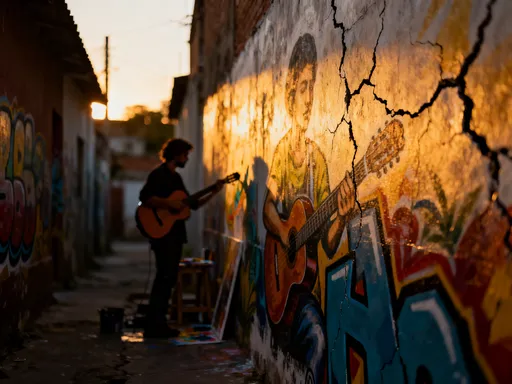
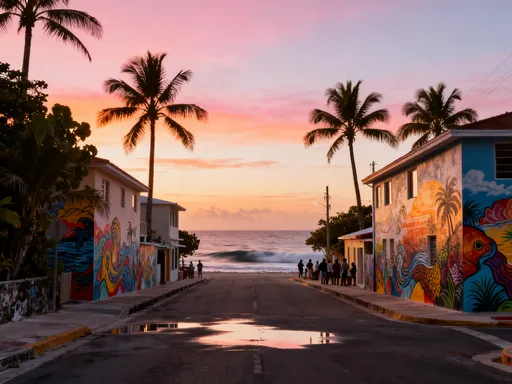
One of the most powerful voices in Asunción’s cultural landscape is its street art. In neighborhoods like Las Heras, Villa Aurelia, and Barrio Obrero, blank walls have become canvases for bold, emotional storytelling. These murals are not mere decorations; they are public conversations. Artists use spray paint and stencils to address themes such as social justice, national identity, environmental awareness, and the resilience of everyday people. Each piece carries a message, often layered with symbolism drawn from Guaraní cosmology, historical memory, and contemporary struggles.
Walking through these districts feels like flipping through the pages of an open-air journal. In Las Heras, a massive mural depicts a woman weaving on a traditional loom, her hands transforming threads into the map of Paraguay. Nearby, another wall shows children playing beneath a tree whose roots form the shape of the continent. These images are not random—they reflect a deep connection between land, language, and lineage. The artists, many of whom are self-taught, see their work as both personal expression and civic duty. They paint not for fame, but to remind their neighbors of who they are and where they come from.
What’s remarkable is how these artworks have contributed to urban renewal. Once-neglected buildings now stand as landmarks of community pride. Local residents often protect the murals, cleaning the walls and discouraging vandalism. Some neighborhoods have even organized guided walks to showcase their street art, turning alleys into informal galleries. For the observant traveler, these tours offer a rare glimpse into the heart of Asunción’s neighborhoods—places where life unfolds at a human scale, where art is not separate from daily existence but woven into its fabric.
Hidden Studios and Independent Art Spaces
Beyond the streets, Asunción’s creative spirit thrives in small, unassuming studios tucked into residential streets. These spaces—often little more than converted garages or back rooms of family homes—are where painters mix their pigments, sculptors shape clay, and ceramicists fire their kilns. Unlike formal galleries, many of these ateliers welcome visitors with little more than a polite knock. There is no entry fee, no curated exhibit list—just the chance to witness art being made, often while chatting with the artist over a cup of tereré, the cold herbal tea beloved in Paraguay.
One such studio, located in the quieter Barrio Santísima Trinidad, is run by a mother-and-daughter team who specialize in ceramic masks inspired by Guaraní legends. Their workshop doubles as a classroom, where they teach local youth traditional techniques passed down through generations. The masks, painted in earthy reds, deep blues, and forest greens, are not sold in tourist markets but at small community fairs or by word of mouth. Visitors are encouraged to ask questions, take photos, and even try their hand at shaping clay. The atmosphere is warm, unhurried, and deeply personal—everything commercial art spaces often lack.
Another notable space is a collective studio in Villa Morra, where six emerging artists share a sunlit warehouse. Their work ranges from abstract paintings using natural dyes to mixed-media pieces incorporating recycled materials. What unites them is a commitment to sustainability and cultural memory. One artist uses strips of ao po’i fabric—Paraguay’s handwoven cotton—in her collages, while another constructs sculptures from discarded wood and metal found in city markets. These artists are not seeking international fame; they are building a local ecosystem of creativity, one where collaboration outweighs competition.
Cultural Hubs Off the Tourist Radar
While the Museo del Barro remains a well-known destination for traditional art, Asunción harbors quieter cultural centers that offer equally rich experiences. Housed in colonial-era mansions and repurposed civic buildings, these spaces serve as sanctuaries for poetry, music, and dance. The Centro Cultural de España en Asunción, for example, hosts regular readings by Paraguayan writers, often featuring bilingual presentations that highlight the poetic beauty of the Guaraní language. These events draw small, attentive audiences—locals who come not for entertainment, but for connection.
Equally compelling are the city’s network of *casas de cultura*—community-run cultural houses found in nearly every district. These unassuming buildings, often painted in soft pastels, function as creative incubators. On any given evening, one might stumble upon a rehearsal for a traditional dance troupe, a guitar lesson for teenagers, or a storytelling session where elders recount folktales in Guaraní. There is no formal schedule posted online; participation often depends on word of mouth or a friendly inquiry at a neighborhood shop. This lack of visibility is not a flaw—it is a feature. These spaces exist for the community, not for tourism, and their authenticity is preserved by their modesty.
For the curious traveler, gaining access is simple: show up with respect and openness. A warm greeting in Spanish or a few words in Guaraní can go a long way. Staff and participants are typically welcoming to outsiders who demonstrate genuine interest. Some centers even offer short workshops or language exchanges, allowing visitors to engage more deeply. These moments of shared culture—listening to a poem, clapping along to a folk melody, or learning a traditional step—are the kind of experiences that linger long after a trip ends.
Traditional Crafts Meets Modern Design
Asunción is where heritage craftsmanship is being reimagined with fresh vision. The city’s markets and boutique shops increasingly feature products that honor ancestral techniques while embracing contemporary aesthetics. One of the most celebrated examples is ñandutí lace, a delicate form of needlework with origins in the colonial era. Traditionally used for tablecloths and bridal veils, ñandutí is now appearing on modern clothing, lampshades, and even smartphone cases. Young designers are collaborating with elder artisans to preserve the intricate patterns while adapting them for today’s tastes.
Similarly, ao po’i fabric—handwoven cotton known for its subtle texture and natural dyes—is being transformed into stylish tote bags, cushion covers, and minimalist dresses. These items can be found in small boutiques in the Villa Morra and Las Mercedes districts, as well as at weekend artisan markets like Mercado Cuatro. What sets these shops apart is their transparency: many display photos of the weavers, list the regions where the cotton is grown, and explain the natural dyeing process using plants like achiote and indigo. This storytelling elevates the products from souvenirs to meaningful keepsakes.
For travelers, purchasing these items is more than a shopping experience—it’s a way to support sustainable cultural preservation. Every purchase helps fund local artisans, many of whom live in rural areas and rely on urban markets to sell their work. Visitors are encouraged to ask questions, learn about the making process, and appreciate the time invested in each piece. A single ñandutí doily can take weeks to complete; understanding this labor fosters deeper respect. In a world of mass production, these handmade treasures offer a quiet rebellion—a return to care, patience, and beauty.
The Soundtrack of the City: Live Music in Intimate Settings
Music in Asunción is not confined to concert halls. It spills into plazas, drifts from open windows, and fills small bars with the resonance of harps, guitars, and violins. The city’s musical soul lies in its folk traditions, particularly Paraguayan polka and guarania—genres characterized by melancholic melodies and poetic lyrics. These sounds, rarely heard outside the country, form the emotional backdrop of daily life. On weekend evenings, it’s common to find impromptu gatherings in Plaza Uruguaya, where musicians play for the joy of it, surrounded by families, couples, and curious passersby.
For a more structured experience, intimate venues like Teatro Indígena and small cultural cafes host live performances several nights a week. These shows are rarely advertised with flashy posters; instead, information spreads through social media groups and community bulletin boards. Seating is often informal—wooden chairs, benches, or even the floor—and the atmosphere is one of shared appreciation. The music itself is deeply expressive, often touching on themes of love, longing, and national pride. Harpists, in particular, command reverence; the Paraguayan harp is considered a national treasure, and its players are seen as cultural guardians.
Visitors who time their trip with local cultural calendars—such as the Festival del Centro in September or the Asunción International Book Fair in November—may catch special performances that bring together musicians from across the country. Even without a festival, a simple inquiry at a cultural center or café can lead to an unforgettable evening of music. The key is to remain open to spontaneity. In Asunción, the best concerts are often the ones you don’t plan for—the ones that find you, like a melody carried on the evening breeze.
How to Explore Asunción’s Art Scene Like a Local
To truly experience Asunción’s underground culture, one must adopt the pace and mindset of a local. Rushing through the city on a checklist of landmarks will yield only surface impressions. Instead, slow travel—walking, observing, and engaging—is the most rewarding approach. Begin by choosing a neighborhood and exploring it on foot. Areas like Las Heras, Villa Aurelia, and Santísima Trinidad are particularly rich in artistic activity and are safe for daytime walking. Wear comfortable shoes, carry water, and don’t hesitate to smile and greet people; friendliness is deeply valued in Paraguayan culture.
Another effective strategy is to join a locally led walking tour. Several small organizations offer guided visits to street art sites, independent studios, and cultural centers. These tours are often led by artists or cultural workers who provide context and facilitate introductions. Unlike mass-market tours, these experiences are small-group and conversational, allowing for genuine dialogue. Some even include studio visits where participants can try their hand at weaving, pottery, or painting under the guidance of a master artisan.
Respect is paramount when entering creative or community spaces. Always ask before taking photographs, especially of people. If an artist is working, wait for a natural pause before engaging. A simple “¿Puedo ver su trabajo?” (“May I see your work?”) is often enough to open a conversation. When purchasing art or crafts, negotiate politely and fairly—remember that many creators rely on these sales for their livelihood. Finally, embrace the unexpected. Some of the most memorable moments in Asunción happen by chance: a mural around a corner, a song drifting from an open window, a shared cup of tereré with a stranger who becomes a temporary friend.
Conclusion
Asunción doesn’t shout about its art—it whispers. But if you listen closely, walk slowly, and look beyond the obvious, you’ll find a rich cultural tapestry few ever witness. This city rewards curiosity with authenticity, offering not just sights, but soul. In a world of curated travel experiences, Asunción remains beautifully unpolished—and that’s exactly why it matters. Its creativity is not performative; it is lived, shared, and deeply rooted in community. From the murals that speak truth to power, to the looms that keep ancient patterns alive, to the harp strings that vibrate with national memory, Asunción’s art is a quiet act of resistance against forgetting. To visit is not to consume culture, but to participate in it, even if only for a moment. And in that participation lies a rare and lasting connection—one that reminds us why travel, at its best, is not about where we go, but how deeply we see.