This Is Why Ho Chi Minh City’s Street Food Scene Is a Cultural Masterpiece
You know what blew my mind in Ho Chi Minh City? It’s not just the food—it’s how every bite tells a story. From sizzling sidewalk grills to generations-old pho stalls, the streets pulse with flavor and history. I never expected that a bowl of bún thịt nướng could feel like an art form. This is more than eating; it’s experiencing Vietnam’s soul, one dish at a time. The city, still affectionately called Saigon by locals, thrives on movement, memory, and meals shared in the most unassuming spaces. Beneath the hum of motorbikes and the flicker of neon signs lies a culinary tradition that has survived war, embraced change, and evolved into one of the world’s most vibrant street food cultures. To walk its alleys is to step into a living kitchen where every vendor is both artist and historian.
The Heartbeat of Saigon: Food as Living Culture
In Ho Chi Minh City, food is not simply sustenance—it is rhythm, resilience, and identity. The street food scene pulses with the same energy that defines the city itself: fast, adaptive, and deeply human. Every morning, before the sun fully rises, the sidewalks come alive with the quiet industry of vendors setting up their modest stalls. Pots of broth begin to simmer, baskets of herbs are rinsed and arranged, and grills are lit with care. These are not random acts of commerce; they are rituals passed down through generations, shaped by decades of history and hardship.
The roots of this culinary culture run deep. During the French colonial period, Vietnamese cooks adapted European ingredients and techniques, giving birth to dishes like bánh mì, which combines a crisp baguette with pickled vegetables, pâté, and grilled meats. Later, during times of scarcity in the postwar years, resourcefulness became a survival skill. Leftovers were transformed into flavorful meals, and street vending emerged as both a necessity and a craft. Today, these influences live on not as relics, but as living traditions that continue to feed the city.
What makes this culture so powerful is its accessibility. A meal can cost as little as a dollar, yet it carries the weight of heritage. Families gather on plastic stools, children sip sugarcane juice while parents share a plate of bún bò Huế, and office workers squeeze in a quick lunch between meetings. The street becomes a dining room, a social hub, and a stage for everyday life. Vendors, many of whom have spent decades at the same corner, are not just cooks—they are storytellers whose recipes speak of migration, adaptation, and pride.
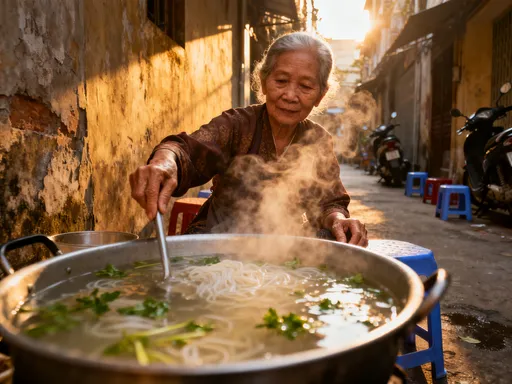
One morning, near a quiet park in District 3, I watched an elderly woman prepare her daily batch of rice noodles by hand. Her movements were precise, almost meditative. When I asked how long she had been doing this, she smiled and said, “Since before the city had traffic lights.” Her stall had no sign, no menu—only regulars who knew exactly when and where to find her. This kind of quiet dedication is everywhere in Saigon, woven into the fabric of daily life. The street food scene is not just about what you eat, but about who made it, how they learned it, and why they continue.
Art on a Plate: The Aesthetics Behind the Flavors
There is an unspoken elegance in Vietnamese street food that goes far beyond taste. Each dish is a composition of color, texture, and balance—carefully arranged even when served on disposable plates. A plate of gỏi cuốn, fresh spring rolls wrapped in translucent rice paper, is a study in contrast: pink shrimp, white vermicelli, green lettuce, and purple perilla leaves, all tied together with a vibrant peanut dipping sauce. The visual appeal is not accidental; it reflects a cultural emphasis on harmony and freshness.
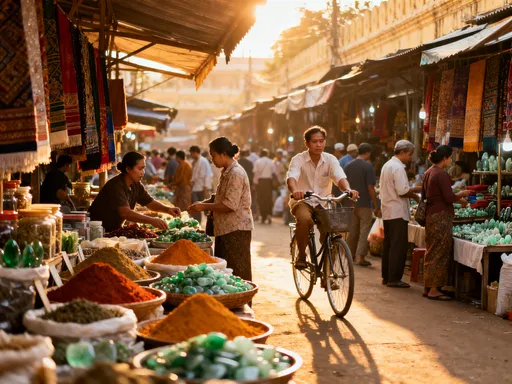
Walk through Bến Thành Market at dawn, and you’ll see this aesthetic in every corner. Stalls overflow with pyramids of tropical fruit—mangos, dragon fruit, rambutan—stacked like natural sculptures. Bunches of herbs are displayed with care: mint, cilantro, Thai basil, and sawtooth coriander, each with its own role in the flavor profile of a dish. The colors are bright, the scents intoxicating. It feels less like a marketplace and more like a gallery of edible art.
Even something as simple as a bowl of phở is a masterpiece of clarity and balance. The broth, simmered for hours with beef bones, star anise, and charred ginger, should be clear and fragrant, never cloudy. The noodles must be tender but not mushy, the meat thinly sliced and perfectly cooked. A proper phở is served with a side plate of fresh herbs, lime wedges, and sliced chilies—ingredients that allow the diner to customize the flavor, but also to participate in the final act of creation.
This attention to detail is not reserved for upscale restaurants. It is embedded in the street food culture itself. Vendors take pride in how their food looks, knowing that presentation is part of the experience. A plate of cơm tấm—broken rice topped with grilled pork, a fried egg, and pickled vegetables—is arranged with precision: the rice forms a neat mound, the egg sits perfectly centered, and the vegetables are fanned out like a garnish. It is food meant to be seen as much as tasted.
The artistry extends to the sounds and smells of the streets. The rhythmic chop of a knife on a wooden board, the sizzle of bánh xèo batter hitting a hot griddle, the gentle steam rising from a pot of congee—these are the sensory notes of Saigon’s culinary symphony. To eat here is to engage all the senses, not just taste. It is a reminder that food, at its best, is a full-bodied experience.
Where Tradition Meets Innovation: Must-Try Food Hubs
While the entire city is a street food paradise, certain neighborhoods offer especially rich experiences. District 3, with its tree-lined streets and colonial architecture, is home to some of the most beloved family-run stalls. Tucked into quiet alleys, these vendors often serve the same dish for decades, perfecting their craft with every batch. One afternoon, I followed the scent of grilled pork to a tiny stall where a mother and daughter team served bún thịt nướng from a single table. The pork was marinated in lemongrass and fish sauce, then grilled over charcoal until slightly charred at the edges. Served over cold rice noodles with shredded lettuce, fresh herbs, and a tangy nước chấm, it was simple, balanced, and unforgettable.
District 10, on the other hand, is a maze of hẻm—narrow alleyways that pulse with culinary life. Here, the pace is faster, the crowds denser, and the options seemingly endless. One alley might specialize in dim sum, another in noodle soups, and yet another in sweet desserts. The beauty of hẻm culture is its intimacy. Stalls are often just a few feet wide, and seating is communal. You might find yourself sharing a table with students, taxi drivers, and retirees, all united by their love of good food.
Tân Định, known for its pastel-pink church and vibrant café scene, has become a hotspot for younger food lovers who blend tradition with modern flair. Along its sidewalks, you’ll find vendors selling cà phê sữa đá—Vietnamese iced coffee with sweetened condensed milk—next to stalls offering bánh mì with creative fillings like lemongrass chicken or grilled shrimp with avocado. The area also hosts a popular morning market where locals shop for fresh produce, dried seafood, and homemade condiments. It’s a place where the old and new coexist, much like the city itself.
What unites these neighborhoods is authenticity. Unlike the tourist-heavy areas near landmarks like the Notre-Dame Cathedral or the Central Post Office, these districts are where locals eat. There are no English menus, no Instagrammable backdrops—just real food, made by real people. To explore them is to step off the beaten path and into the heart of Saigon’s culinary soul.
The Ritual of Eating: How Locals Experience Street Food
Eating street food in Ho Chi Minh City is as much about the experience as it is about the meal. There are no formal rules, but there are customs—unwritten guidelines that shape how people interact with food and each other. One of the first things visitors notice is the seating: tiny plastic stools, often no more than ten inches high. At first, they may seem uncomfortable, but they serve a purpose. They bring people closer to the ground, to the street, to the shared space of the meal.
Communal tables are another hallmark of the culture. You might arrive alone, but you rarely eat alone. Strangers sit side by side, sharing space, sometimes even sharing condiments. There is an unspoken understanding: everyone is here for the same reason, and no one is in a hurry. Meals unfold slowly, punctuated by sips of tea, bites of fresh herbs, and casual conversation. It’s not uncommon to see an office worker in a suit eating next to a motorbike delivery man, both enjoying the same plate of hủ tiếu.
The way food is eaten also reflects deeper values. Chopsticks and spoons are used with precision. The spoon is not just for soup—it’s a tool for balance, used to hold noodles while cutting meat or scooping up broth. Diners are expected to mix their own flavors, adjusting with lime, chili, or fish sauce to suit their taste. This hands-on approach emphasizes personal choice and participation, reinforcing the idea that food is not just given, but co-created.
Meal timing also plays a role. Breakfast in Saigon often starts early, with vendors serving congee, rice porridge, or steamed buns by 5 a.m. Lunch is a midday ritual, a break from work to recharge with a hot bowl of phở or a plate of cơm tấm. Dinner might be a late-night affair, with families gathering for bánh xèo or grilled seafood. Snacks are eaten throughout the day—fresh fruit, sugarcane juice, or bánh tráng trộn (a tangy rice paper salad)—because in Saigon, food is always in season.
Even small gestures carry meaning. Tipping is not expected, but a nod of thanks or a simple “cảm ơn” goes a long way. Napkins, often just small squares of thin paper, are used sparingly. Waste is minimal. The focus is on the food, not the frills. In this way, street food becomes more than a meal—it becomes a practice of mindfulness, community, and respect.
Beyond Taste: The Craftsmanship Behind the Scenes
Behind every great meal is a story of labor, love, and legacy. The beauty of Saigon’s street food lies not just in what reaches the table, but in what happens before. Take phở broth, for example. A true batch simmers for at least six hours, often longer. Bones are blanched first to remove impurities, then boiled with charred onion, ginger, and a blend of spices—star anise, cloves, cinnamon, and cardamom. The vendor stirs, skims, and adjusts the heat with the care of a chemist. The result is a broth that is clear, fragrant, and deeply flavorful—a testament to patience and precision.
Herbs are another example of craftsmanship. Many vendors grow their own or source from trusted suppliers. Each leaf is hand-washed, dried, and arranged with care. Cilantro stems are kept intact for extra flavor, mint is picked at its peak, and perilla is used not just for taste but for its digestive benefits. Nothing is wasted. Even the scraps are composted or fed to animals, reflecting a culture of sustainability long before it became a global trend.
Fish sauce, the soul of Vietnamese cuisine, is often homemade or sourced from small coastal producers. The best varieties are aged for months, developing a complex umami flavor that store-bought versions can’t replicate. Vendors mix their own nước chấm, balancing fish sauce with lime juice, sugar, garlic, and chili to create a dipping sauce that enhances without overpowering.
These practices are not just about quality—they are expressions of identity. In conversations with vendors, a common theme emerges: pride. One woman who has sold bún bò Huế for over thirty years told me, “If I don’t make it right, I can’t sleep.” For many, cooking is not just a job; it is a responsibility to their family, their customers, and their culture. The recipes are often passed down from mothers to daughters, uncles to nephews, with small variations that make each stall unique.
And yet, this craftsmanship often goes unnoticed by those who rush through a meal on their way to the next attraction. To truly appreciate Saigon’s street food, one must slow down, observe, and acknowledge the hands that made it possible. It is in these quiet moments of recognition that the food becomes more than a dish—it becomes a connection.
Navigating the Scene: Practical Tips for Immersive Dining
For visitors, the abundance of street food can be both exciting and overwhelming. The good news is that navigating the scene is easier than it seems—with a few simple guidelines, anyone can eat like a local. First, look for stalls with high turnover. A busy vendor is usually a sign of fresh food and satisfied customers. If you see locals lining up, especially during peak hours, that’s a strong indicator of quality.
Cleanliness matters, but it may look different than what you’re used to. Many vendors wash their hands in a small basin before serving, use clean cloths to wipe down tables, and keep their ingredients covered. Avoid stalls with flies, stagnant water, or unrefrigerated meats. Trust your instincts—if something feels off, it probably is.
Cash is still king. Most street vendors do not accept cards, so carry small bills in Vietnamese đồng. Having the right change makes the transaction smoother and shows respect for the vendor’s time. Tipping is not required, but leaving a little extra or simply saying “cảm ơn” with a smile can brighten someone’s day.
Timing is everything. Some dishes are best at certain times of day. Phở is traditionally a breakfast food, though it’s available all day. Bánh mì is perfect in the morning or as a quick lunch. For something sweet, try chè, a traditional dessert soup, in the afternoon. And for a late-night snack, nothing beats a warm bowl of hủ tiếu or a freshly grilled bánh xèo.
Language can be a bridge. Learning a few basic phrases—“Xin chào” (hello), “Cảm ơn” (thank you), “Một cái, cảm ơn” (one, please)—goes a long way. Pointing works, but a little effort in Vietnamese shows respect and often leads to a warmer interaction. Don’t be afraid to smile, gesture, or ask for help. Most locals are happy to guide you.
Avoid the obvious tourist traps. While some popular spots near landmarks are good, many are overpriced and less authentic. Instead, wander into residential areas, follow the scent of grilling meat, or ask your hotel staff for their favorite local spot. Some of the best meals I’ve had were in alleys with no name, found only by chance and curiosity.
Food as a Gateway: Understanding Vietnam Through Its Streets
Ultimately, street food in Ho Chi Minh City is more than a culinary experience—it is a window into the soul of Vietnam. Each dish carries the imprint of history, geography, and human resilience. The flavors reflect the country’s regional diversity: the bold spices of Central Vietnam, the French influence in the south, the herbal freshness of the Mekong Delta. To eat here is to taste the layers of a culture that has endured, adapted, and flourished.
But beyond history, street food reveals the everyday joy of Vietnamese life. It is in the laughter shared over a communal table, the pride of a vendor serving their signature dish, the quiet satisfaction of a well-balanced meal. It is a reminder that happiness often comes in simple forms: a warm bowl of soup, a cold drink on a hot day, a moment of connection with a stranger.
For travelers, approaching street food with curiosity and respect transforms a meal into a meaningful encounter. It invites a slower, more attentive way of traveling—one that values presence over photos, connection over convenience. When you sit on a plastic stool, order something you can’t pronounce, and let the flavors surprise you, you’re not just eating. You’re participating in a living tradition.
So the next time you find yourself in Ho Chi Minh City, don’t just pass by the sizzling grills and steaming pots. Stop. Sit. Taste. Ask questions. Smile. Let the food tell you its story. Because in these moments, you’re not just a visitor—you’re part of the rhythm, the heartbeat, the cultural masterpiece that is Saigon’s street food scene.