You Won’t Believe These Hidden Gems in The Hague
I never expected The Hague to be such a visual masterpiece. Beyond its political reputation, the city whispers stories through its architecture—quiet courtyards, forgotten facades, and modern wonders tucked in plain sight. I stumbled upon rooftops with secret gardens, 17th-century passageways still in use, and buildings where old-world charm meets bold innovation. If you think you know The Hague, think again. This is about the unseen details that make it unforgettable.
Beyond Politics: The Architectural Soul of The Hague
The Hague is often introduced as a city of international law, diplomacy, and formal institutions. Its global image is shaped by the presence of the International Court of Justice, the International Criminal Court, and numerous embassies. Yet beneath this serious exterior lies a city rich with architectural nuance, where centuries of design evolution unfold in brick, stone, and glass. While tourists may flock to the Peace Palace or the Binnenhof, the true soul of The Hague reveals itself in the quieter corners—residential streets where gabled rooftops lean gently into one another, alleyways paved with uneven cobblestones, and façades that bear the quiet dignity of time.
The city’s architectural identity is a layered one, shaped by waves of history. During the Dutch Golden Age, The Hague emerged as a center of governance and culture, attracting skilled artisans and ambitious builders. This era left behind elegant townhouses with symmetrical windows, ornate doorways, and decorative stonework—elements that still define the city center. However, unlike Amsterdam or Delft, The Hague avoided widespread destruction during wartime conflicts, allowing many original structures to survive. At the same time, post-war reconstruction introduced functionalist and modernist designs, creating a unique juxtaposition between old and new.
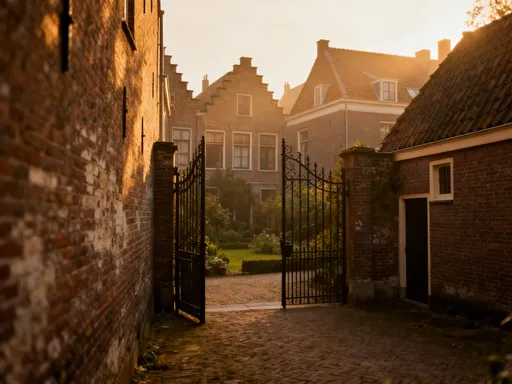
One of the most distinctive styles in The Hague is the Haagse School, or Hague School, which refers not only to a 19th-century art movement but also to a regional approach to brick architecture. Characterized by warm red and brown bricks, stepped gables, and restrained ornamentation, this style gives many neighborhoods a cohesive yet unpretentious charm. Buildings in areas like Statenkwartier and Archipelbuurt exemplify this aesthetic, blending residential comfort with civic dignity. The use of local materials and traditional craftsmanship ensures that even newer constructions maintain a visual dialogue with their surroundings.
What sets The Hague apart from other Dutch cities is its ability to absorb change without losing character. While Rotterdam embraced radical modernism after World War II, The Hague pursued a more measured path—one that respects historical continuity while welcoming innovation. This balance is evident in districts like Transvaal and Mariahoeve, where restored 19th-century homes stand beside sensitively designed infill buildings. The city’s planners have long understood that architecture is not just about form, but about memory, identity, and the rhythm of daily life.
Courtyards and Passages: Hidden Worlds in Plain Sight
Wander just a few steps off the main avenues, and The Hague begins to reveal its secrets. Tucked behind unmarked doors and narrow archways are the city’s *hofjes*—almshouse courtyards that date back to the 16th and 17th centuries. These quiet enclaves were originally established by charitable foundations to house elderly women or widows, often funded by wealthy benefactors or religious institutions. Though their purpose has evolved, many remain active communities, preserving their historical layouts and tranquil atmospheres.
One of the most captivating examples is the Hofje van Meulenhof, located near the Grote Kerk. Accessed through a simple wooden door, the courtyard opens into a symmetrical garden bordered by small, gabled houses with white-framed windows and flower boxes. The cobblestone path leads to a central well, now symbolic but once essential to daily life. What makes these spaces so powerful is their contrast with the bustling city outside. Stepping into a hofje feels like entering a paused moment in time—where the rustle of leaves, the chirp of sparrows, and the soft glow of sunlight on brick replace the noise of traffic and commerce.
Similar experiences await in the Hofje van Loo, founded in 1618, and the Hofje van Nieuwkoop, both located in the historic core. These courtyards are not museum pieces; they are lived-in spaces where residents tend gardens, hang laundry, and sit on benches during afternoon breaks. Their preservation is a testament to The Hague’s commitment to maintaining social and architectural continuity. Unlike more tourist-heavy sites, these hofjes are rarely crowded, offering a rare opportunity for quiet reflection and intimate observation.
Equally enchanting are the city’s hidden passages—narrow alleys that connect streets and squares, often overlooked by visitors. The Passage, though now a covered shopping arcade, began as one of these connectors, linking the Spui with the Lange Vijverberg. Other lesser-known walkways, like those behind the Prinsegracht or near the Gevangenpoort, retain their original scale and materials. These passages invite slow exploration, rewarding those who pause to notice wrought-iron railings, weathered doorbells, and the subtle play of light and shadow across brick walls.
The Modern Edge: Where Innovation Meets Tradition
The Hague is not a city frozen in time. While it honors its past, it also embraces architectural innovation with confidence and care. This is most evident in recent developments like the Zuidplein complex, a large-scale urban renewal project that transformed a once-dated district into a vibrant mixed-use neighborhood. The new Zuidplein features a sleek public transport hub, energy-efficient residential towers, and communal green spaces—all designed with accessibility and sustainability in mind. What makes this transformation remarkable is its sensitivity to scale and context. Rather than imposing massive, monolithic structures, the architects chose layered volumes and human-scaled façades that complement rather than dominate the surroundings.
Another striking example is the new City Hall annex, completed in the early 2020s. Its transparent glass façade and open-plan layout symbolize transparency and civic engagement, core values of local governance. The building’s design allows natural light to flood public spaces, reducing energy use and creating an inviting atmosphere for residents handling official matters. At the same time, its minimalist aesthetic avoids competing with the historic cityscape; instead, it serves as a quiet counterpoint to the ornate stonework of nearby 19th-century buildings.
The coexistence of old and new is perhaps best illustrated along the Lange Voorhout and its adjacent streets. Here, the curved glass roof of the Passage shopping arcade—completed in the 1950s but recently renovated—stands in elegant contrast to the angular transparency of modern office buildings. The Passage itself is a landmark of post-war modernism, blending functionality with artistic detail, including mosaic murals and sculptural lighting fixtures. Its preservation and upgrade demonstrate how mid-century architecture can be both respected and revitalized.
Throughout the city, architects are increasingly adopting principles of adaptive reuse—transforming former schools, offices, and even parking garages into residential lofts, cultural centers, and community hubs. One notable example is the conversion of a 1960s municipal building into artist studios and exhibition spaces, complete with rooftop terraces and vertical gardens. These projects reflect a growing understanding that sustainability in architecture is not just about energy efficiency, but about preserving cultural value and reducing waste through thoughtful design.
Seaside Contrasts: Scheveningen’s Evolving Skyline
No exploration of The Hague’s architecture would be complete without a visit to Scheveningen, its seaside district. Once a modest fishing village, Scheveningen has evolved into a dynamic coastal destination, balancing tourism, recreation, and urban development. Its architectural journey mirrors this transformation—from traditional wooden houses and net-drying racks to grand hotels and contemporary beachfront structures. The most iconic landmark is the Kurhaus, a majestic hotel built in 1901 in the Art Deco style, with sweeping colonnades, symmetrical wings, and a central dome that commands views of the North Sea.
The Kurhaus stands as a symbol of early 20th-century seaside elegance, a time when sea bathing was considered therapeutic and resorts were designed for leisure and refinement. Though it has undergone several renovations, its essential character remains intact. Nearby, the Scheveningen Pier, rebuilt in 2015 after a fire, showcases modern engineering with its steel-and-glass structure and panoramic observation deck. The contrast between the Kurhaus’s ornate classicism and the pier’s sleek minimalism captures the district’s dual identity—rooted in tradition, yet open to change.
Recent developments along the promenade reflect a thoughtful approach to coastal architecture. New buildings incorporate maritime materials such as weathered steel, glass panels with wave-like patterns, and wood cladding treated to withstand salt air. Some structures feature elevated walkways and green roofs, designed to minimize environmental impact and enhance public access to the beach. The transformation of old bathhouses into cultural venues—such as a former changing pavilion now used for art exhibitions—further illustrates how history can be repurposed with creativity and respect.
A short walking tour from the Kurhaus to the lighthouse reveals the layers of Scheveningen’s built environment. Along the way, visitors pass fishermen’s huts painted in bright blues and reds, modern apartment blocks with sea-facing balconies, and public art installations embedded in the seawall. The rhythm of the district changes with the tides and seasons—busy in summer, contemplative in winter—offering different perspectives on its architecture throughout the year. For those who look closely, even the street furniture—benches, lampposts, and signage—reflects a design language that honors the sea and its rhythms.
Why Architecture Lovers Miss the Real The Hague
Most travel guides highlight the obvious landmarks: the Mauritshuis with its Vermeer masterpieces, the Binnenhof’s medieval halls, and the Peace Palace’s imposing façade. These are undeniably important, but they represent only a fraction of what The Hague has to offer. Too often, visitors follow prescribed routes, ticking off major sites without pausing to notice the subtleties that give the city its true character. The real magic lies not in grand monuments, but in the details—the pattern of tiles on a doorstep, the curve of a wrought-iron balcony, the way sunlight hits a row of 18th-century townhouses at dawn.
Architectural appreciation requires slowing down. It means looking beyond facades to understand how buildings serve their communities, how materials age with grace, and how small design choices accumulate into a sense of place. In The Hague, this might mean noticing how roof slopes are designed to shed rain efficiently, how door frames are slightly recessed to protect against wind, or how courtyard gates are positioned to allow light into interior rooms. These are not flashy features, but they reflect a deep understanding of climate, culture, and human needs.
Another reason travelers miss the deeper layers of The Hague is the pace of modern tourism. Many arrive on day trips from Amsterdam or Rotterdam, spending only a few hours in the city. This limited time encourages a checklist mentality, prioritizing photo opportunities over meaningful engagement. To truly see The Hague, one must linger—sit on a bench in a quiet square, return to the same street at different times of day, or strike up a conversation with a local resident. These moments of stillness allow the city’s rhythms to emerge, revealing patterns that are invisible in a rush.
For those eager to go deeper, practical tools can enhance the experience. Carrying a sketchbook encourages observation and mindfulness, helping to capture textures, proportions, and spatial relationships. A camera with a macro lens can reveal details invisible to the naked eye—the grain of brick, the patina of metal, the reflection of clouds in a puddle. Even a simple notebook, used to jot down impressions or architectural terms, can transform a casual walk into a personal study. The goal is not to become an expert, but to develop a habit of seeing—of noticing what others overlook.
How to Explore Like a Local: Routes and Rhythms
To experience The Hague as its residents do, consider taking one of three self-guided walking routes, each designed to highlight a different aspect of the city’s architectural identity. These walks are under three kilometers, making them accessible for all ages and fitness levels. They are best enjoyed in the early morning or late afternoon, when light enhances textures and streets are less crowded.
The first route, the Historic Core Walk, begins at the Grote Kerk and loops through the old city center. Key stops include the Hofje van Meulenhof, the Prinsegracht canal with its colorful houseboats, and the Gevangenpoort, a 13th-century prison with a preserved tower and underground cells. The route continues along the Lange Vijverberg, passing the Binnenhof and ending at the Mauritshuis. Along the way, walkers are encouraged to pause at small squares like the Groenmarkt, where outdoor cafés offer a chance to rest and observe street life.
The second route, the Southern Neighborhoods Walk, explores the residential districts south of the city center. Starting at the Hollands Spoor train station, it moves through the Archipelbuurt, known for its Haagse School brickwork and tree-lined avenues. Highlights include the Huygenspark, a quiet green space with a children’s playground and shaded benches, and the former Huygens Gymnasium, a 1920s school building now converted into apartments. The walk ends at the Haagse Markt, one of the largest open-air markets in the Netherlands, where the architecture of market stalls blends with the sounds and scents of daily commerce.
The third route, the Coastal Edge Walk, begins at the Scheveningen lighthouse and follows the promenade eastward. It passes the Kurhaus, the pier, and several beach pavilions, each with its own architectural character. The path continues along the dunes, offering views of both sea and sky. In spring and summer, wildflowers bloom along the dune edges, adding color to the landscape. The walk ends at the Panorama Mesdag, housed in a circular building designed specifically to display a 19th-century panoramic painting of Scheveningen. The building itself, with its domed roof and classical details, is a quiet architectural gem.
For each route, public transport is convenient and reliable. The Hague’s trams and buses connect all major neighborhoods, and many stops are within a five-minute walk of the suggested paths. Travelers are advised to wear comfortable shoes, carry water, and bring a light jacket—even in summer, coastal breezes can be cool. While digital maps are helpful, printed brochures from the city’s tourist office provide additional context, including historical notes and architectural highlights.
The Quiet Beauty of Everyday Spaces
At its heart, The Hague’s architecture is not about spectacle, but about dignity in the everyday. It is found in the way a restored brick wall catches the morning light, how a well-placed window frames a view of the sky, or how a simple courtyard offers a moment of calm in a busy life. These are not grand gestures, but quiet affirmations of care, continuity, and community. They remind us that beauty does not require scale or opulence—it can reside in the slope of a roof, the texture of a wall, or the rhythm of a street.
For the thoughtful traveler, especially one who values balance, history, and authenticity, The Hague offers a rare opportunity. It is a city that does not shout, but speaks in whispers—through the creak of a wooden door, the pattern of cobblestones, the silhouette of a gable against the evening sky. Its hidden gems are not secret because they are hidden from view, but because they require attention to be seen. They ask for nothing more than a moment of presence, a willingness to look closely, and a heart open to discovery.
In a world where travel often means chasing the next highlight, The Hague invites a different rhythm—one of patience, observation, and connection. It teaches us that the most enduring experiences are not always the loudest or most photographed, but the ones that settle quietly in the soul. So the next time you visit, leave the checklist behind. Walk without urgency. Let the city reveal itself, not in monuments, but in details. Because in the end, it is the small things—the enduring, the overlooked, the beautifully ordinary—that make a place truly unforgettable.