Tracked My Moods for 90 Days: This App Cut My Stress Time in Half
Life gets overwhelming—juggling work, family, and self-care can leave you drained before the day even starts. I used to feel constantly on edge, unsure why some days felt heavier than others. Then I tried something simple: a health tracking app that didn’t just log data, but helped me *understand* my patterns. Within weeks, I noticed fewer emotional spikes, quicker recoveries from stress, and more calm mornings. This isn’t about perfection—it’s about progress, and how a tiny daily habit quietly transformed my mental resilience.
The Morning That Changed Everything
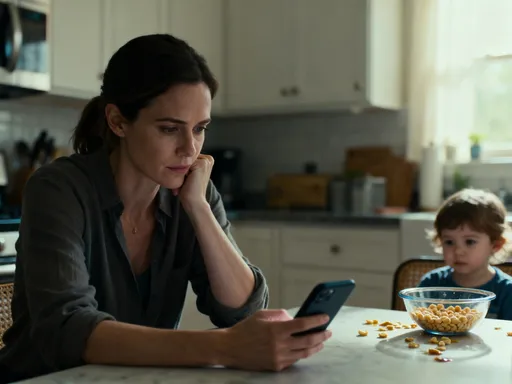
It was a Tuesday. The kind of morning where everything seemed to go wrong in slow motion. My youngest spilled cereal all over the kitchen floor—again—and instead of laughing it off like I usually do, I snapped. My voice was sharp, my face hot. I saw the surprise in my daughter’s eyes, the way she blinked back tears, and my heart sank. I knelt down, apologized, cleaned it up with a shaky hand, but the guilt lingered like a shadow for the rest of the day.
I wasn’t mad about the cereal. I knew that. But I didn’t know what I *was* mad about. Was it the unread work emails piling up? The laundry I hadn’t folded? The fact that I’d barely slept because I stayed up scrolling through old photos? I couldn’t pinpoint it. What I did know was that I felt like I was running on empty, and I kept pouring from an empty cup. That moment was a wake-up call. I realized my stress wasn’t just random—it was building, silently, day after day, like water rising behind a dam. And I had no idea when it would burst again.
That night, I asked myself a question I’d never considered before: What if I could see the pattern before it exploded? What if I could catch the early signs—like fatigue, irritability, or even subtle shifts in how I spoke to my family—before they turned into full-blown meltdowns? I wasn’t looking for a magic fix. I wasn’t even sure I needed therapy—though I respect those who do. I just wanted to understand myself better. To stop feeling like a stranger in my own mind. That’s when I decided to try mood tracking. Not as a clinical tool, but as a personal experiment in awareness. A way to finally listen to the quiet signals my body and mind had been sending all along.
Choosing the Right App: Less Data, More Insight
I’ll be honest—I’ve tried health apps before. The kind that ask you to log every sip of water, every step, every bite of food. And within a week, I’d quit. Not because I didn’t care, but because it felt like another chore. Another item on a never-ending to-do list. So when I started looking for a mood tracker, I was skeptical. I didn’t want something that would add to my stress. I wanted something that would help me reduce it.
I tested three different apps over the first week. The first one looked like it belonged in a doctor’s office—charts, graphs, clinical terms like ‘affective dysregulation’ and ‘emotional valence.’ I felt judged just opening it. The second asked me to answer ten detailed questions every night: How anxious were you on a scale of 1 to 10? Did you experience any panic symptoms? Rate your sleep quality. It was thorough, yes, but also exhausting. I lasted three days.
Then I found the one that stuck. It was simple: one tap to log my mood—happy, okay, low, or overwhelmed—plus an optional note if I felt like adding one. No pressure. No guilt. And once a week, it sent me a gentle summary: ‘You logged more “okay” days this week,’ or ‘You seemed calmer on days you went outside.’ No jargon. No alarms. Just a quiet reflection of how I’d been feeling. It felt less like a medical device and more like a kind friend who was just checking in.
What made it work wasn’t the features—it was the ease. I could do it in ten seconds while brushing my teeth or waiting for the coffee to brew. That low friction made all the difference. I didn’t need motivation. I didn’t need discipline. I just needed something that fit into my life, not the other way around. And for the first time, I didn’t feel like I was failing when I missed a day. The app didn’t scold me. It just waited, patiently, for the next check-in. It was like keeping a diary, but without the guilt of skipping pages.
The First Week: Confusion, Not Clarity
Let’s be real—nothing changed after day one. In fact, the first few days felt a little silly. I’d tap my mood, say ‘okay,’ and wonder, ‘What am I even doing?’ It felt like talking to a robot that couldn’t answer back. I didn’t see any patterns. I didn’t feel any calmer. If anything, I was more aware of how scattered I felt. But I kept going, mostly out of stubbornness. I told myself I’d give it two weeks. No magic in seven days.
Then, on day six, something shifted. The app sent me a little notification: ‘You logged three “low” moods this week. They followed late screen time and skipped breakfast.’ I paused. That was… accurate. Tuesday night, I’d stayed up until 11:30 watching a show, and Wednesday morning, I’d skipped breakfast because I was running late. And yes—that was the day I’d snapped at my daughter. I hadn’t connected those dots on my own. But the app had.
That small insight sparked something in me—curiosity, not shame. I wasn’t broken. I wasn’t failing. I was just overlooking simple things that were quietly draining my energy. It wasn’t that I was a bad mom or a weak person—it was that I wasn’t giving myself the basics I needed to stay balanced. Sleep. Food. Boundaries with my phone. The app didn’t tell me to fix everything at once. It just showed me where to look.
So I started small. I set a phone curfew at 9:30 PM. I put a sticky note on the fridge: ‘Eat breakfast before you leave.’ Tiny things. But they felt doable. And for the first time in a long time, I felt like I had a little more control. Not over my kids, not over my job, but over myself. That week, I only logged one ‘low’ day. And it wasn’t because my life got easier—it was because I started showing up for myself in a new way.
Two Weeks In: Seeing Patterns, Not Just Data
By the second week, the app began showing me weekly summaries with simple color-coded charts. Green for good days, yellow for okay, and red for tough ones. No numbers, no complex analysis—just a visual story of my week. And seeing it laid out like that made something click. I could *see* the connection between my choices and my mood.
One Monday stood out. I’d walked the dog before work—even though it was raining, even though I was tired. Just ten minutes. And that day, I logged ‘happy.’ Not ‘okay.’ Not ‘fine.’ Happy. The app didn’t make a big deal of it. But I did. I realized that tiny moment of fresh air and movement had set the tone for my entire day. It wasn’t about fitness or productivity. It was about giving myself a small gift of calm before the chaos began.
I started noticing other patterns too. I felt more patient on days I ate lunch before 1 PM. I was less reactive when I’d had a proper breakfast. And my evenings were smoother when I didn’t scroll through my phone right after dinner. These weren’t earth-shattering revelations—but they were *mine*. And because I could see them, they became real. I didn’t need willpower to change. I just needed to *see*.
I began sharing these little discoveries with my partner in casual ways. ‘Turns out, I’m less grumpy when I eat lunch before 1.’ Or, ‘I think I need to stop checking work emails after 8.’ He didn’t tease me. Instead, he said, ‘That makes sense. You *do* seem calmer when you eat earlier.’ Those small conversations turned my private tracking into shared understanding. It wasn’t about fixing me—it was about helping the people who love me understand how to support me. And that, in itself, felt like a win.
Building Better Habits Without Burnout
One of the biggest lessons I learned was this: consistency beats intensity every time. I used to think self-care meant 20-minute meditations, journaling three pages, or doing a full workout before sunrise. And every time I couldn’t do it, I felt like I’d failed. But this app taught me something different. It didn’t measure success by how long I meditated or how many steps I took. It measured it by one thing: did I check in today?
That tiny daily habit—tapping my mood—became the anchor. From there, I started adding micro-habits. Two mindful breaths after logging. A glass of water before coffee. A five-minute stretch after dinner. Nothing dramatic. But because they were small, I could actually do them. And because I did them, I felt good. Not because I’d transformed my life overnight, but because I’d shown up for myself—again.
The app didn’t reward me with badges or streaks. But I rewarded myself with kindness. I’d think, ‘Look at you. You remembered to eat. You took a walk. You logged your mood even when you didn’t feel like it.’ That self-praise mattered. It rebuilt a sense of trust between me and myself. I wasn’t waiting for some future version of me to arrive. I was learning to appreciate the one who was already here.
And here’s the thing—task completion became its own reward. I didn’t need a perfect day to feel accomplished. I just needed to do the small thing. Over time, those small things added up. I wasn’t chasing peace. I was practicing it, one quiet moment at a time.
The Ripple Effect on Family Life
I didn’t expect my mood tracking to affect anyone else. But it did. My kids started noticing. ‘Mom, you’re not yelling as much,’ my oldest said one afternoon. My youngest hugged me and said, ‘You smell happy today.’ I laughed, but it hit me—my energy had shifted. I wasn’t just managing my stress. I was modeling calm.
I didn’t hide what I was doing. I explained it simply: ‘This little app helps me take care of my brain, like brushing my teeth.’ I didn’t preach. I didn’t force anyone to track their moods. But slowly, changes began to ripple through our home. We started having dinner earlier. We put our phones in a basket after 8 PM. My partner started going to bed at the same time as me. No rules. No arguments. Just small shifts, inspired by seeing me make space for my own well-being.
One night, my daughter asked if she could try the app too. ‘Not for stress,’ she said. ‘But to remember when I feel proud.’ My heart nearly burst. She wasn’t copying me—she was learning to care for her own emotions. That, to me, was the real victory. The app didn’t fix my life. It helped me become the kind of person I wanted my kids to learn from. Calm. Present. Kind—to myself and to others.
Looking Back: How 90 Days Changed My Relationship with Myself
After three months, I stopped using the app every day. Not because I gave up. Not because I didn’t need it. But because I didn’t need it the same way anymore. The patterns had sunk in. I could feel the early signs of stress now—tight shoulders, a short temper, that familiar heaviness in my chest. I didn’t need an alert to know I needed a break. I could listen to my body. I could respond with kindness.
The real win wasn’t the data. It wasn’t the charts or the notifications. It was *self-trust*. I had learned to pay attention. To pause. To ask, ‘What do I need right now?’ And then to give it to myself—whether it was five minutes of silence, a walk around the block, or just saying no to one more thing.
I used to think self-care was selfish. Now I see it as necessary. Like putting on your oxygen mask first. You can’t pour from an empty cup. And you can’t expect to be present for your family if you’re running on fumes. This simple tool didn’t just track moods—it helped me reclaim agency. It taught me that I have the power to shape my days, not just survive them.
So if you’re feeling overwhelmed, if you’re snapping at your kids or shutting down at night, I want you to know: it’s not just you. And it’s not your fault. But it *is* something you can change. You don’t need a complete overhaul. You don’t need to be perfect. You just need one small habit—one tiny moment of awareness—to start shifting the tide. Because peace isn’t a destination. It’s a practice. And it’s never too late to begin.